Skip to content

Italy

Umbria

Italy's green heart, where hill towns, sacred landscapes and ancient roads unfold slowly.

Umbria is an inland region of stone hill towns, Roman and Etruscan traces, medieval pilgrimage routes, olive groves and quiet valleys. From Assisi and Perugia to Spello, Orvieto, Norcia and the Valnerina, its landscapes reward travellers who linger long enough to understand the places they are seeing.

Heritage Travellers, Slow TravelBest for
Ancient History, Roman HeritageCharacter
4–10 daysIdeal time
Slow, ImmersivePace

DISCOVER

THE LAND BETWEEN THE HILLS

Umbria reveals itself through layers rather than landmarks alone: ancient peoples, Roman roads, medieval communes, monasteries, pilgrimage traditions and agricultural landscapes remain woven into the region's towns and countryside.

Come for the hill towns and sacred heritage; stay for the landscapes, food, craftsmanship and slower rhythm between them.

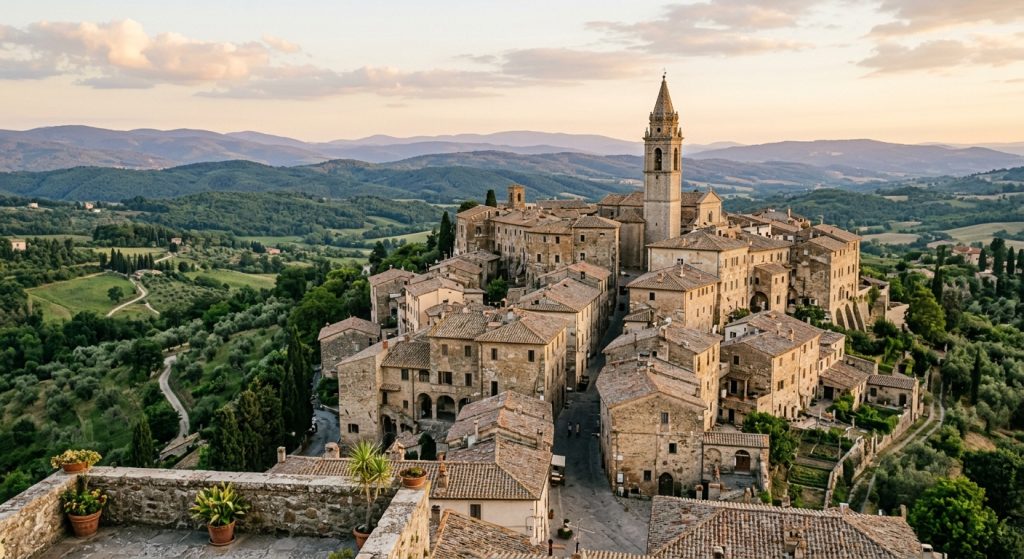
Historic Umbrian hill town rising above a green Italian valley
Scene 1

Hill Towns Above the Valleys

Umbria's historic towns are inseparable from their landscapes. Stone-built settlements rise above valleys and cultivated hills, with medieval streets, piazzas, churches and defensive walls often revealing how geography shaped settlement and power.

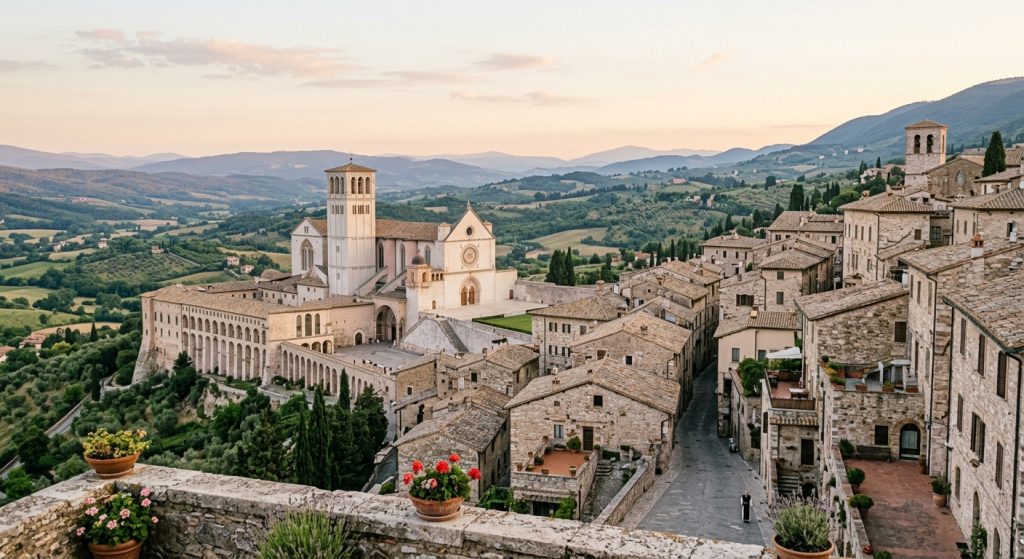
Assisi historic centre and Basilica of Saint Francis overlooking the Umbrian landscape
Scene 2

Assisi and the Sacred Landscape

Assisi is one of Umbria's defining places, shaped by the life and legacy of Saint Francis and by centuries of pilgrimage. Its religious significance sits within a wider landscape of monasteries, hermitages, olive groves and paths across the hills.

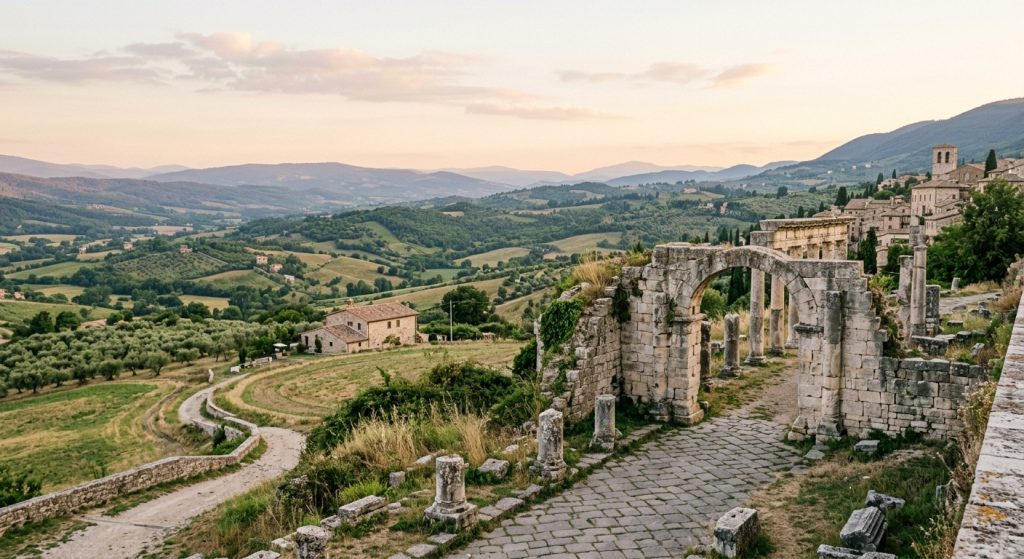
Ancient Roman and pre-medieval archaeological remains in the Umbrian landscape
Scene 3

The Ancient Layers

Long before the medieval towns that define modern Umbria, the region was inhabited by Italic peoples and influenced by the Etruscans and Romans. Archaeological remains, ancient roads, Roman structures and museum collections allow fragments of those earlier landscapes to be read alongside the medieval world.

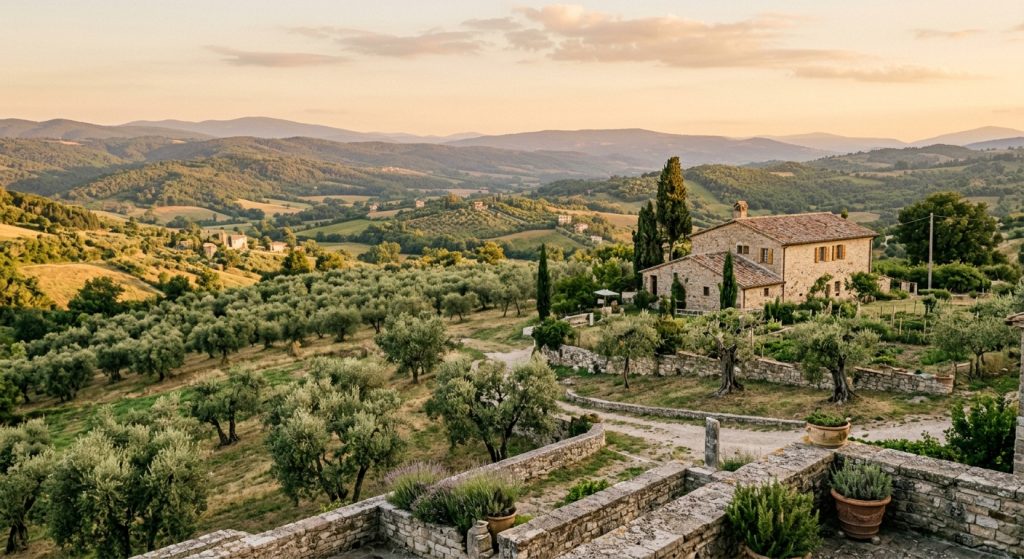
Umbrian olive groves and traditional regional food landscape
Scene 4

Olive Groves and the Table

Agriculture remains central to Umbria's identity. Olive groves, vineyards, legumes, truffles and regional specialities connect the countryside to local food traditions, making the landscape something to taste as well as observe.

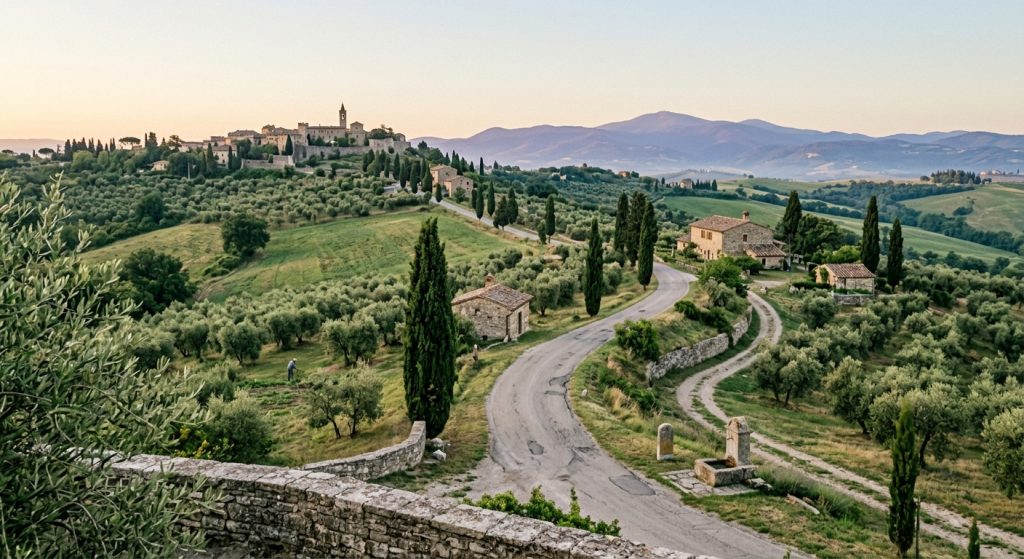
Quiet rural road winding through the Umbrian hills
Scene 5

The Roads Between Places

Some of Umbria's strongest experiences lie between the headline destinations: a minor road through olive country, a village piazza, a monastery approached on foot, or a meal that reveals the character of a particular valley. The region rewards movement at a human pace.

THE JOURNEY

A FIRST JOURNEY THROUGH UMBRIA

A first visit works best when built around a small number of bases and explored through the landscapes and smaller places between them rather than treating the region as a collection of day-trip stops.

Day 1

Assisi and the Sacred Hills

Begin with Assisi, allowing time for its churches, medieval streets and wider Franciscan landscape. Look beyond the principal monuments to the relationship between the town, pilgrimage and the surrounding countryside.

Day 3

Spello, Foligno and the Valleys

Move through the Umbrian valley landscapes and explore smaller historic centres such as Spello, where Roman and medieval layers coexist with contemporary village life, food and craft.

Day 5

Spoleto and the Southern Hills

Continue south toward Spoleto and the landscapes of the Valnerina, combining historic architecture with walks, rural scenery and the quieter character of southern Umbria.

Day 7

Orvieto and the Etruscan World

Finish around Orvieto, whose dramatic hilltop setting and deep archaeological history provide a different perspective on Umbria. Explore the relationship between the modern town, underground spaces, Etruscan heritage and the surrounding countryside.

Day 9

Stay Longer, Go Deeper

Use additional days to explore lesser-known villages, monasteries, food-producing landscapes and walking routes rather than adding another major destination. This is where Umbria's slower rhythm becomes most apparent.

WHY HERE

WHY WE INSIST YOU GO

Umbria is compelling because its heritage is not confined to individual monuments. History, faith, agriculture, landscape and everyday life remain unusually close together, creating the kind of destination that becomes more rewarding the longer you stay.

History You Can Still Walk Through

Ancient, Roman and medieval layers remain visible in towns, churches, roads, walls and archaeological sites rather than existing only behind museum glass.

A Living Sacred Landscape

The legacy of Saint Francis and centuries of pilgrimage gives the region a distinctive spiritual geography, particularly around Assisi and the surrounding hills.

The Landscape Is Part of the Story

Olive groves, vineyards, forests and valleys are not simply scenery. They explain settlement, agriculture, cuisine and the enduring character of Umbrian communities.

Places Worth Slowing Down For

Umbria is especially suited to travellers who prefer several meaningful encounters with a region rather than a rapid checklist of attractions.

PLAN WITH CONFIDENCE

Good to Know

Practical details for planning this place well.

Best For

Heritage Travellers, Slow Travel, History Lovers, Pilgrimage And Sacred Heritage, Food And Wine, Art And Architecture, Walking, Couples, Independent Travellers

Themes

Ancient History, Roman Heritage, Etruscan Heritage, Medieval Towns, Religious Heritage, Pilgrimage, Landscape, Olive Oil, Wine, Regional Cuisine, Craftsmanship, Art And Architecture

Pace

Slow, Immersive, Unhurried

Getting Around

Rental Car, Regional Trains, Local Buses, Walking

A car is the most practical way to explore Umbria's dispersed hill towns, rural landscapes and smaller villages. Rail is useful between major centres such as Perugia, Assisi, Spello, Foligno, Spoleto and Terni, with local buses extending access in some areas. Many historic centres are best explored on foot.

When to Go

Late spring and early autumn offer a particularly good balance of mild weather, countryside colour, walking conditions and manageable visitor pressure. Summer can be hot inland, while winter is quieter and atmospheric but less suitable for some outdoor experiences.

FIND IT

Location

Umbria — Italy

KEEP EXPLORING

Could you see yourself here?

You don't need dates, an itinerary or a firm plan. Tell us what caught your attention and we'll help you explore what could come next.